Language levels A1, A2, B1, B2: what do they really mean?

When you start learning Dutch, you often hear about levels A1, A2, B1, and B2. But what exactly do these letters and numbers mean? And which level do you need for your goals in the Netherlands?
In this blog, I explain each level in simple terms, so you know exactly where you are now and where you're heading.
What are language levels?
The levels A1, A2, B1, and B2 are part of the Common European Framework of Reference for Languages (CEFR). This is an international system used throughout Europe to describe language skills. The system has six levels: A1, A2, B1, B2, C1, and C2. For most goals in the Netherlands, you need a level between A2 and B2.
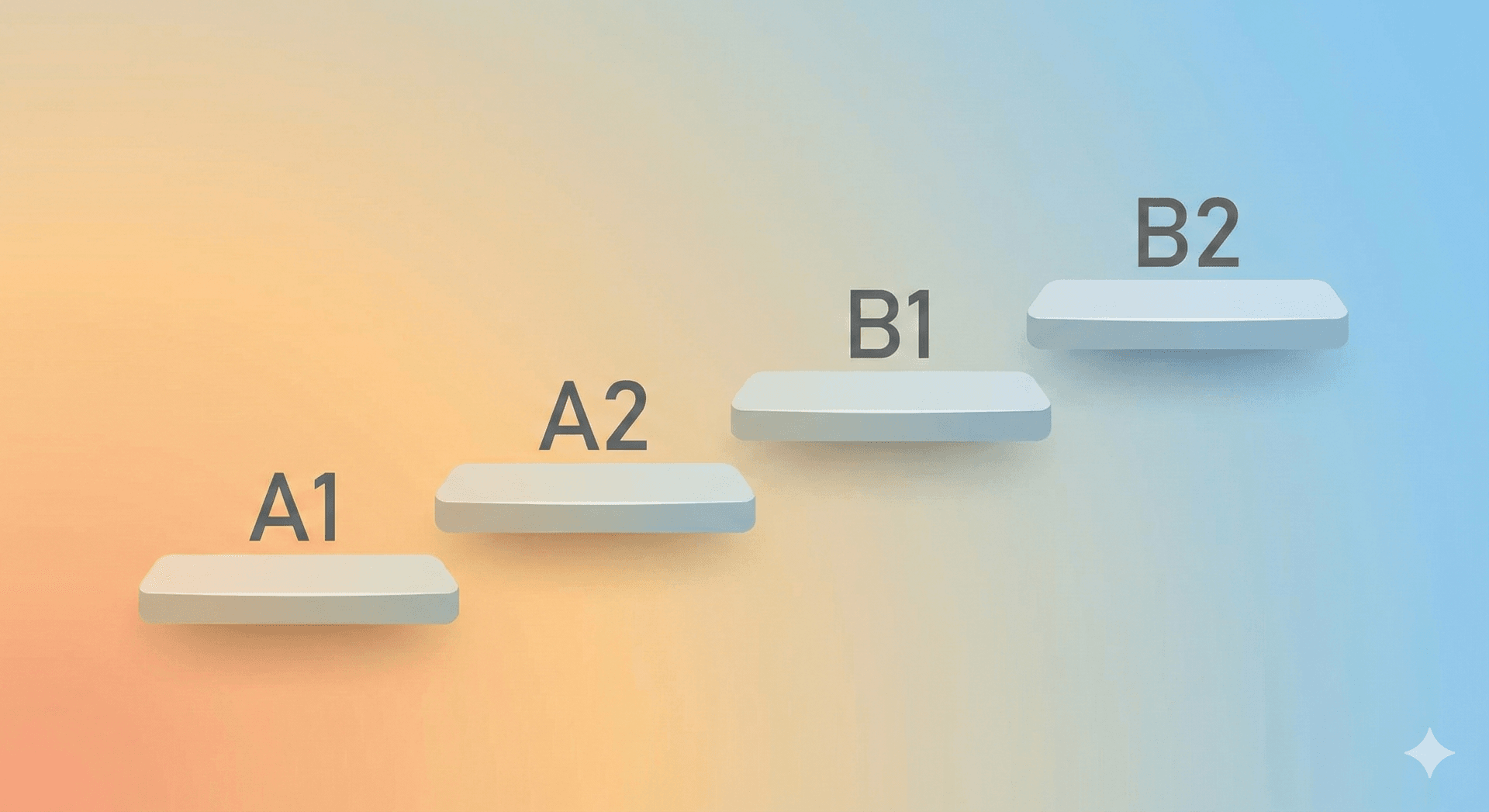
Level A1: the first steps
Level A1 is the beginning of your language journey. At this level, you can introduce yourself and share basic information about yourself. You understand simple words and phrases, such as greetings, numbers, and days of the week. You can ask and answer simple questions, such as "What is your name?" or "Where are you from?".
At level A1, you cannot have a real conversation yet, but you are taking the first important steps. This is the foundation for everything that comes after.
Example: you can order a coffee in a café or greet your neighbour.
Level A2: basic communication
At level A2, you can communicate in simple everyday situations. You understand short texts, such as menus, schedules, and simple announcements. You can talk about your family, work, and daily activities. You can also write short messages and fill in simple forms.
Level A2 is often required for simple jobs or as a first step towards integration.

Example: you can chat with a colleague about the weekend or understand a simple announcement at the train station.
Level B1: independent language use
Level B1 is an important step forward. At this level, you can communicate in most situations you encounter in the Netherlands. You understand the main content of texts about familiar topics, such as work, school, and leisure. You can express your opinion and explain your plans. You can also write a clear email or letter.
Level B1 is the minimum level for the civic integration exam in the Netherlands. Many employers also require this level.

Example: you can explain to the doctor what your symptoms are or discuss rental conditions with your landlord.
Level B2: fluent language use
At level B2, you can communicate confidently and spontaneously. You understand more complex texts, including articles and reports. You can participate in discussions and argue your point of view. You can also write clear and detailed texts on various topics.
Level B2 is required for many professional positions and for studying in the Netherlands. This is also the level of the State Exam NT2 (Staatsexamen NT2), which opens doors to higher education and many professions.
Example: you can give a presentation at work or write an official complaint.
Which level do you need?
This depends on your goal. For the civic integration exam (inburgeringsexamen), you need level B1. For simple jobs, level A2 is usually sufficient, although B1 gives you more opportunities. For professional positions, such as nurse or teacher, level B2 is usually required. For studying at a university or HBO, you also need level B2, demonstrated by the State Exam NT2.
Not sure about your current level? I would be happy to help you determine it during a trial lesson.
How long does it take to reach each level?
This depends on many factors, such as your native language, the intensity of your lessons, and practice outside of lessons. For speakers of Slavic languages, such as Ukrainian or Russian, Dutch can be more challenging due to the large differences in grammar and vocabulary.
As a guideline: from zero to level A2 usually takes 3 to 6 months of intensive study. From A2 to B1 takes another 3 to 6 months approximately. From B1 to B2 can take 6 months to a year. Remember that regular practice and immersion in the language accelerate your progress much more than lessons alone.
How can I help?
I offer individual Dutch lessons, tailored to your level and goals. Because I speak Russian myself and understand Ukrainian, I know which aspects of Dutch are most difficult for you. Together we can work on your pronunciation, grammar, and confidence in conversations.
Summary
Language levels A1, A2, B1, and B2 describe your Dutch language skills. A1 and A2 are basic levels for simple communication. B1 is needed for integration and many jobs. B2 opens doors to a professional career and higher education. With the right guidance and regular practice, you can reach any level.
---
Want to know your current level or start working towards the next one?
Contact me for a free trial lesson →
I would be happy to help you reach your goal.
Comments
No comments yet. Be the first!